


Introduction
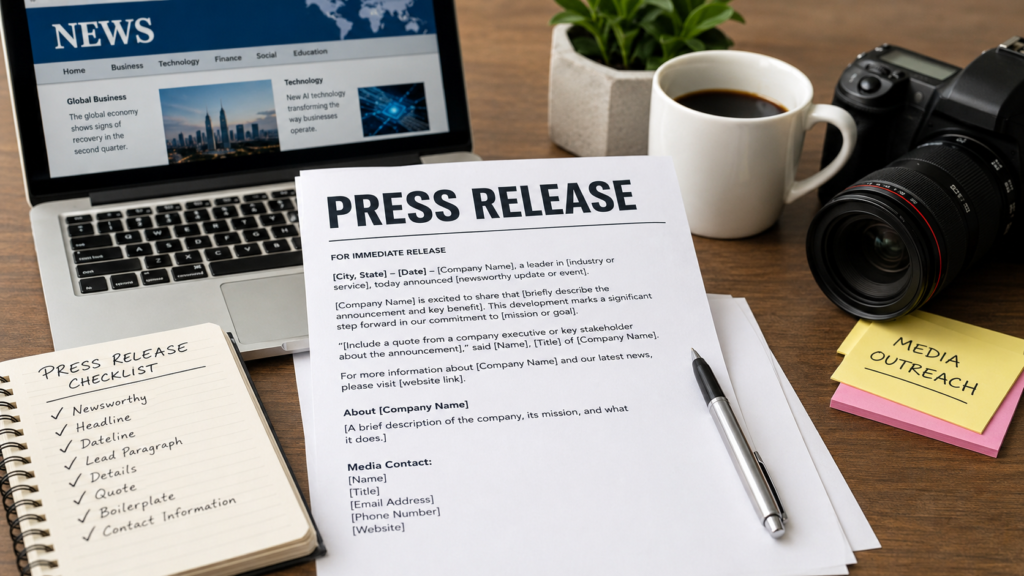
A press release is still one of the most effective ways to share important news with journalists, bloggers, and online publications. Whether you’re launching a new product, announcing a business milestone, or promoting an event, a well-written press release can help your story reach a much larger audience.
Many people search for how to write a press release because they want free media exposure without relying only on paid advertising. The good news is that writing a professional press release doesn’t require years of PR experience. With the right structure and a clear message, anyone can create a press release that captures attention.
What Is a Press Release and Why Does It Matter?
A press release is a formal news announcement designed for media professionals. Its purpose is to present newsworthy information in a clear, factual, and professional format that journalists can quickly understand.
Unlike promotional content, a press release focuses on delivering facts instead of making sales pitches. When written correctly, it can help businesses gain media coverage, improve credibility, and increase online visibility.
Who Should Write Press Releases?
Press releases are useful for:
- Small business owners
- Startup founders
- Marketing teams
- Public relations professionals
- Nonprofit organizations
- Authors and publishers
- Event organizers
- Online brands and bloggers
Anyone with genuine news to share can benefit from learning how to write a press release.
Essential Elements of an Effective Press Release
Create a Powerful Headline
Your headline determines whether people continue reading. It should explain the announcement in one sentence while creating curiosity.
Avoid exaggerated marketing language. Instead, focus on the actual news.
Start with a Strong Opening Paragraph
The first paragraph should answer the most important questions:
- Who?
- What?
- When?
- Where?
- Why?
Journalists often decide within seconds whether your story deserves attention, so make your opening count.
Include Supporting Information
After introducing the news, explain the details clearly.
Discuss why the announcement matters, who benefits from it, and what makes it different. Keep paragraphs short and easy to scan.
Add Authentic Quotes
Quotes make your press release feel more human.
Include comments from a company founder, CEO, manager, or spokesperson that explain the purpose behind the announcement.
Instead of repeating facts, use quotes to share opinions or excitement.
Finish with Contact Information
Always include:
- Company name
- Contact person
- Email address
- Phone number
- Website
Without contact information, interested journalists may not be able to follow up.
Step-by-Step Guide on How to Write a Press Release
Step 1: Choose Newsworthy Content
Before writing, ask yourself if your announcement is genuinely interesting.
Examples include:
- Product launches
- Company partnerships
- Awards
- Major updates
- Charity campaigns
- Business expansion
- Special events
Not every company update needs a press release.
Step 2: Write an Engaging Headline
Keep your headline simple, direct, and informative.
Readers should immediately understand what the announcement is about.
Step 3: Add the Dateline
Include the city and publication date at the beginning of the first paragraph.
This gives your announcement professional formatting.
Step 4: Explain the Story
Expand on your announcement using factual information.
Avoid unnecessary technical language.
Focus on helping readers understand why the news matters.
Step 5: Include Relevant Statistics
If available, add numbers or data that support your announcement.
Statistics increase credibility and help journalists trust your information.
Step 6: Add a Meaningful Quote
A good quote provides personality.
Rather than repeating facts, explain the motivation behind the announcement or the expected impact.
Step 7: Write an About Section
End with a short company description explaining what your organization does.
This helps journalists understand your background.
Step 8: Proofread Before Publishing
Check for:
- Grammar mistakes
- Spelling errors
- Incorrect dates
- Missing contact information
- Formatting issues
Even small errors can reduce credibility.
Real-Life Examples
Example One: Product Launch
A technology company introduces a new productivity app.
Instead of relying only on social media, they distribute a press release to technology websites.
Several blogs publish the story, generating thousands of website visits within a few days.
Example Two: Community Event
A nonprofit organization announces a fundraising marathon.
Local newspapers receive the press release and cover the event, leading to increased attendance and donations.
Example Three: Business Expansion
A local restaurant opens its second location.
The owner shares a press release highlighting the expansion and job opportunities.
Local media feature the story, helping the restaurant attract new customers before opening day.
Pros & Cons
Pros
- Builds trust and professional credibility
- Can attract valuable media coverage
- Supports SEO and online visibility
- Helps share important news efficiently
Cons
- Requires genuinely newsworthy content
- Media coverage is never guaranteed
- Poor writing reduces the chances of publication
Comparison
| Feature | How to Write a Press Release | Other Content Formats |
|---|---|---|
| Designed for journalists | Yes | No |
| Professional news format | Yes | Sometimes |
| Media distribution | Excellent | Limited |
| Brand credibility | High | Moderate |
| SEO opportunities | Strong | Varies |
While blog posts and social media updates are useful, press releases remain the preferred format for sharing official business announcements.
Is Learning Press Release Writing Worth It?
Absolutely—if your business regularly shares news.
Learning how to write a press release gives you greater control over your public announcements and helps present your brand professionally.
However, avoid using press releases for routine updates or promotional messages. Journalists appreciate genuine stories, not advertisements disguised as news.
If your announcement offers real value to readers, a well-crafted press release can become an excellent marketing asset.
Frequently Asked Questions
What makes a press release newsworthy?
A press release should announce something important, timely, and relevant to the public or a specific industry.
How long should a press release be?
Most effective press releases are between 400 and 800 words, although length depends on the complexity of the announcement.
Can small businesses benefit from press releases?
Yes. Even local businesses can gain valuable exposure through regional newspapers, blogs, and online news websites.
Is SEO important for press releases?
Yes. Using relevant keywords naturally, writing clear headlines, and publishing on trusted websites can improve online visibility.
Final Verdict
Knowing how to write a press release is an essential skill for anyone who wants to gain media attention and build credibility. A professional press release combines a compelling headline, factual information, useful details, and an organized structure that makes it easy for journalists to understand your story.
Instead of trying to sound overly promotional, focus on sharing valuable and newsworthy information. Clear writing, accurate facts, and a professional tone will always outperform exaggerated marketing language. As media continues to evolve in 2026, businesses that communicate effectively through quality press releases will have a stronger chance of earning attention, trust, and long-term visibility.
